
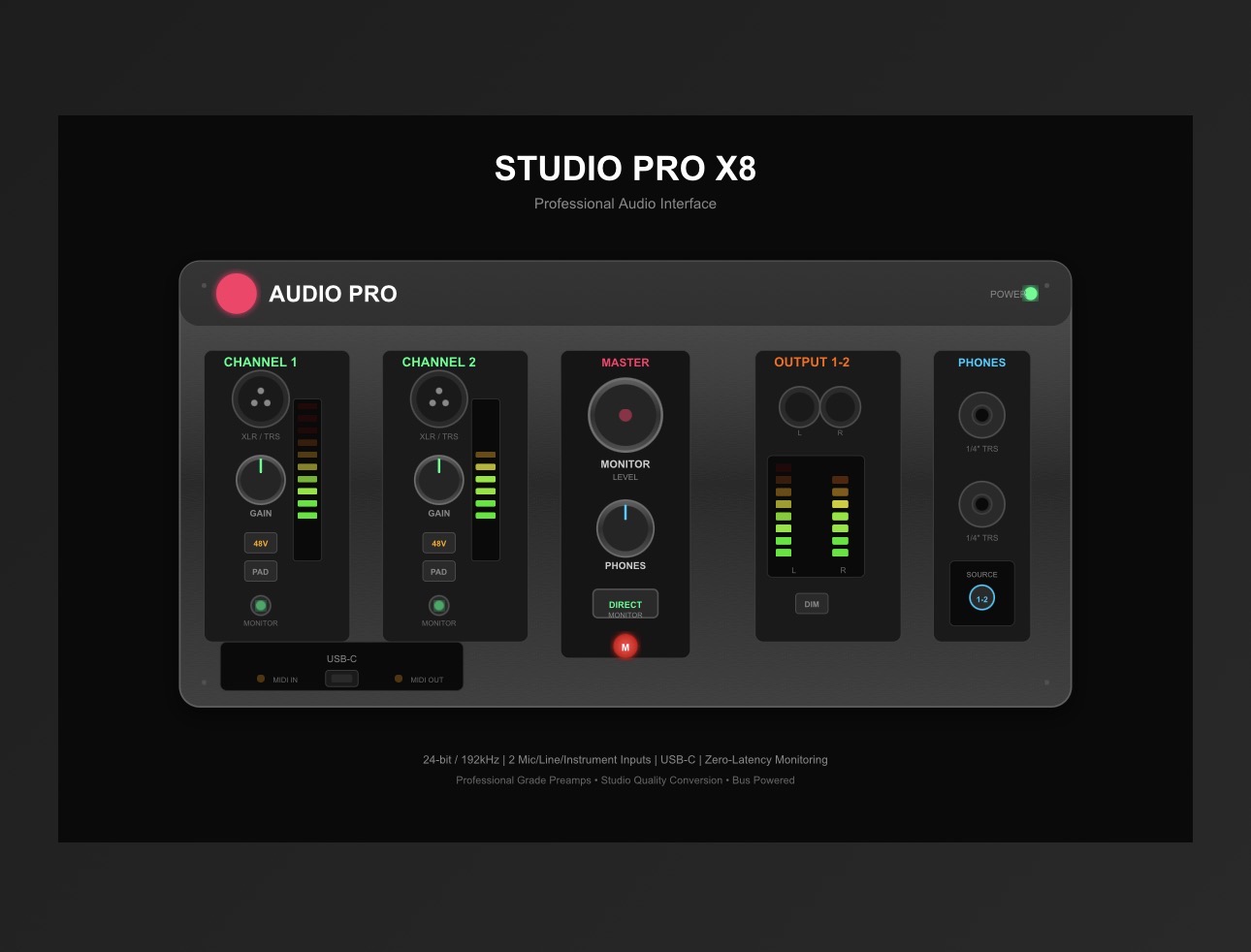
Top Audio Interfaces Every Home Studio Musician in Ghana Should Own
In today’s music world, talent alone is not enough. Sound quality matters. You can have the best lyrics, the sickest beat, and the cleanest delivery, but if your recording sounds noisy, thin, or distorted, listeners will skip it without mercy. That’s where the audio interface comes in. For any home studio musician in Ghana, the audio interface is not a luxury. It’s the backbone of clean, professional sound.
An audio interface is the device that connects your microphone and instruments to your computer. It converts analog sound (your voice, guitar, keyboard) into digital audio your DAW can understand, and then sends sound back to your speakers or headphones with clarity and low latency. Without a good interface, even expensive microphones and plugins will underperform.
Why an Audio Interface Is Non-Negotiable
Many beginners try to record directly through their laptop’s headphone jack or USB mic and wonder why their vocals sound harsh or muddy. Built-in sound cards are not designed for music production. They introduce noise, latency, and weak signal levels.
A proper audio interface gives you:
Clean microphone preamps that capture vocals clearly
Low latency monitoring so your voice stays in sync with the beat
Phantom power (48V) for condenser microphones
Balanced inputs that reduce electrical noise
Accurate playback for mixing and mastering decisions
If you want your songs to sound good on phones, cars, club systems, and streaming platforms, an audio interface is essential.
Understanding Inputs, Outputs, and Preamps
Before choosing an interface, it helps to understand a few key terms.
Inputs are where you plug in microphones or instruments.
Outputs connect to speakers or headphones.
Preamps amplify your microphone signal to a usable level.
Most home studio musicians in Ghana only need two inputs. This allows you to record vocals and one instrument at a time, or two vocals simultaneously. More inputs are useful for bands or live sessions, but they are not necessary for most solo artists and producers.
Focusrite Scarlett Series
The Focusrite Scarlett series is one of the most trusted audio interfaces worldwide, and for good reason. These interfaces are known for clean preamps, solid build quality, and simple setup. Many producers and vocalists in Ghana rely on Scarlett interfaces for home recording.
Scarlett preamps are transparent, meaning they don’t color your voice too much. This is ideal for Afrobeats, gospel, hip-hop, and pop vocals where clarity is important. The interfaces also provide stable phantom power for condenser microphones and work smoothly with popular DAWs like FL Studio, Logic Pro, and Ableton Live.
For beginners, the Scarlett 2-input models are more than enough. They allow you to grow without feeling limited, and the sound quality is strong enough for commercial releases.
PreSonus AudioBox Interfaces
PreSonus AudioBox interfaces are popular among musicians who want reliable performance without spending too much. They are sturdy, compact, and designed to handle everyday recording needs.
AudioBox interfaces are especially good for vocal recording, podcasting, and basic instrument tracking. Their preamps are clean, and they handle dynamic and condenser microphones well. Many artists appreciate their durability, especially in setups where gear is moved often.
For musicians building a studio on a budget, PreSonus offers a good balance between price and performance.
Behringer U-Phoria Series
Behringer U-Phoria interfaces are widely available in Ghana and are often the entry point for many beginners. They are affordable and offer basic features that are enough to start recording music seriously.
While Behringer interfaces may not have the same premium feel as higher-end models, they still provide proper preamps, phantom power, and decent sound quality. Compared to recording without an interface, the difference is massive.
For artists just starting out, a Behringer interface can help you learn recording, gain experience, and upgrade later when your needs grow.
Matching Your Interface with Your Microphone
Your audio interface and microphone must work well together. Condenser microphones need phantom power, so your interface must support it. Dynamic microphones are less sensitive and work well in untreated rooms with background noise.
If your room is noisy or untreated, pairing a dynamic microphone with a clean interface can actually produce better results than a sensitive condenser mic. Understanding this pairing helps you avoid frustration and wasted money.
Monitoring and Headphone Quality
A good audio interface also improves how you hear your music. Clean headphone outputs allow you to monitor vocals accurately while recording. This helps with pitch control, timing, and confidence during takes.
Accurate monitoring is also critical during mixing. If your interface playback is distorted or colored, your mix decisions will be wrong, and the song will not translate well to other systems.
Latency and Workflow
Latency is the delay between when you sing and when you hear your voice back in the headphones. Cheap setups often have noticeable latency, which throws off timing and performance.
Audio interfaces are designed to minimize latency, allowing real-time monitoring. This makes recording smoother and more natural, especially for singers and rappers.
Growing with Your Interface
One good thing about buying a solid audio interface is that it grows with you. As your skills improve, the same interface can still handle better microphones, higher-quality recordings, and more advanced sessions.
Many artists in Ghana release their first serious projects using simple 2-input interfaces and continue using them for years.
An audio interface is not just another piece of gear. It’s the foundation of your sound. Clean vocals, clear instruments, and professional mixes all start here.
If you are serious about music, investing in a proper audio interface is one of the smartest decisions you can make. It improves your sound, boosts your confidence, and helps your music stand shoulder-to-shoulder with international releases.
In the end, people may not know what interface you used, but they will hear the difference.